Shopify Abandoned Cart Recovery: Complete Guide (2026)
Learn how Shopify stores recover more abandoned carts in 2026. Covers identification coverage, Klaviyo flow setup, email optimization, and visitor identification tools.
Practical guides, benchmarks, comparisons, and case studies for Shopify brands using Klaviyo, Omnisend, and other ecommerce marketing tools. Topics include visitor identification, anonymous shopper identification, abandoned cart recovery, ecommerce attribution, and retention growth.
Learn how Shopify stores recover more abandoned carts in 2026. Covers identification coverage, Klaviyo flow setup, email optimization, and visitor identification tools.
Learn what visitor identification is, how it works for Shopify stores, and whether it's right for your setup. Covers match rates, tools, Klaviyo integration, and real results.
Identification Rate tells you what percent of shoppers at each funnel event are reachable by email. Learn how to calculate it, why it matters, and how to use it to forecast recovery revenue.
Your blended cost per acquisition is above target. You know the number is bad. What you do not know is where the problem is coming from.
Paid acquisition feels different when the same budget buys fewer first-time customers than it did six months ago.
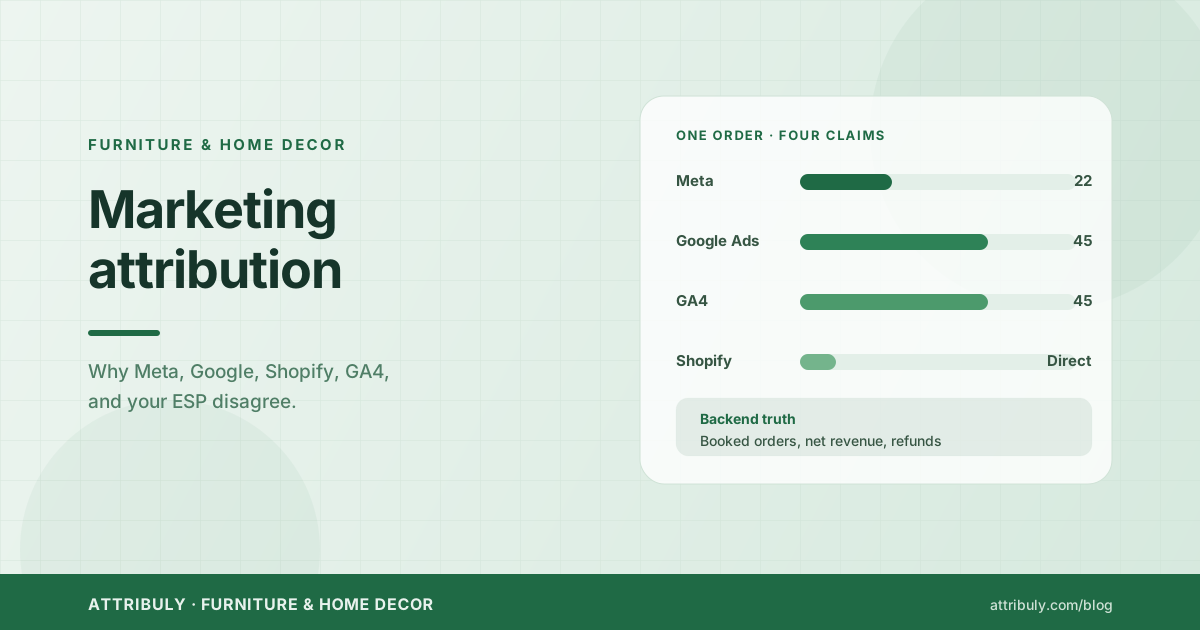
Learn why Meta, Google, Shopify, GA4, and your ESP claim different furniture and home decor sales—and build a framework without double counting.
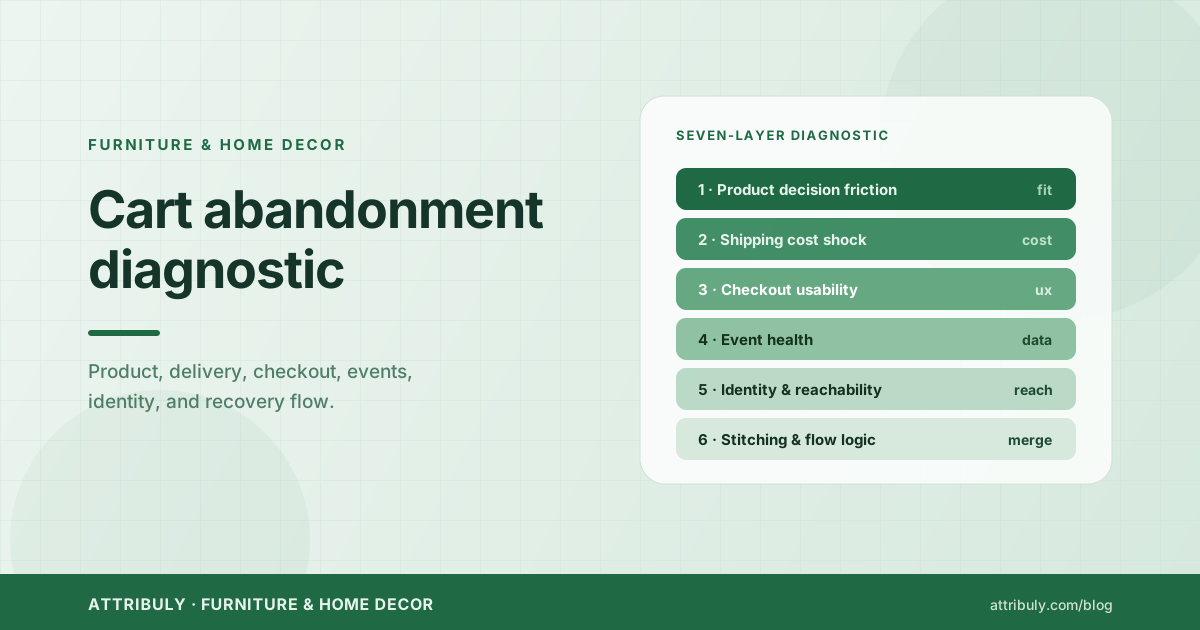
Learn why furniture and home decor shoppers abandon carts and how to fix product, shipping, checkout, tracking, identity, and recovery-flow gaps.
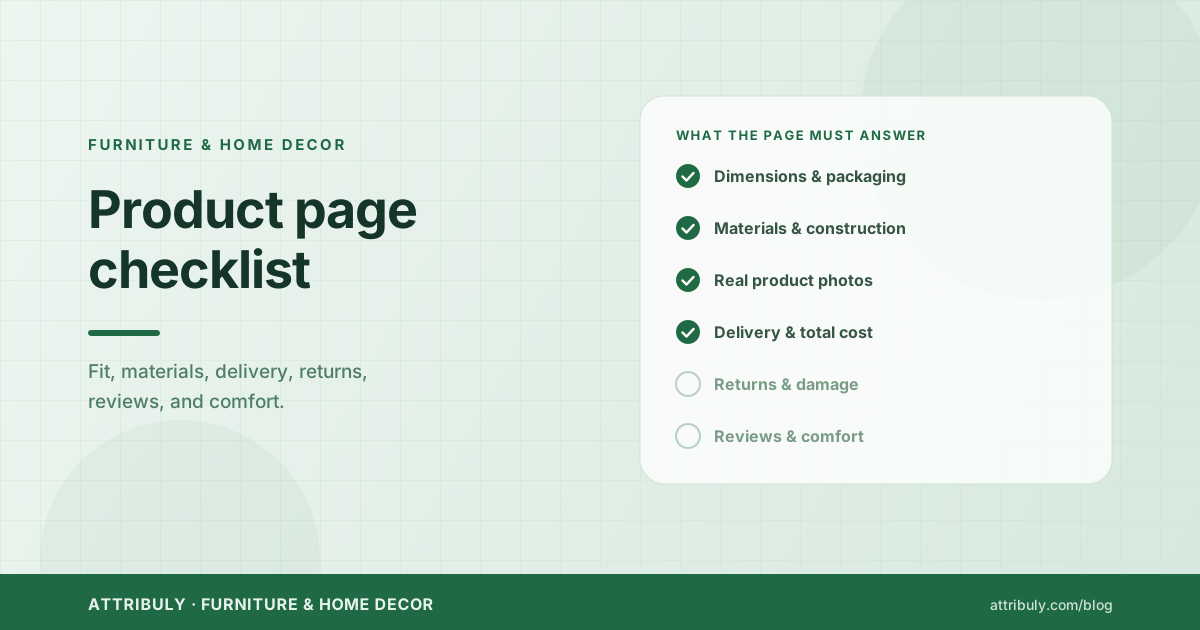
Use this furniture and home decor product page checklist to answer questions about fit, materials, delivery, returns, reviews, and comfort.
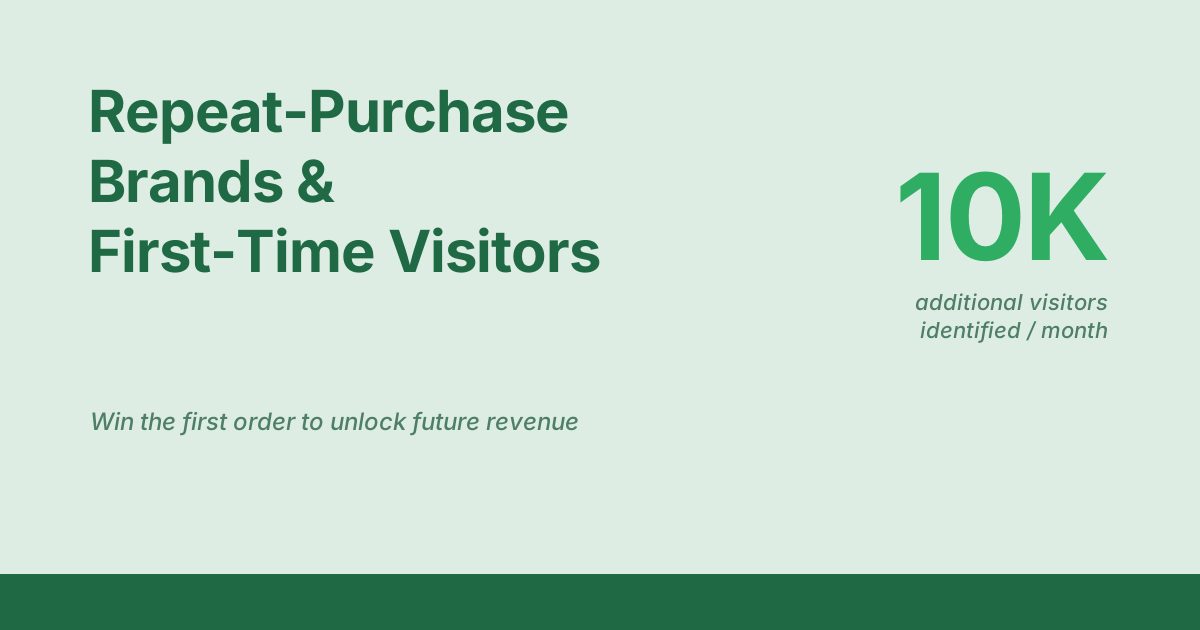
For replenishment businesses, losing the first order can mean losing every order that could have followed it.
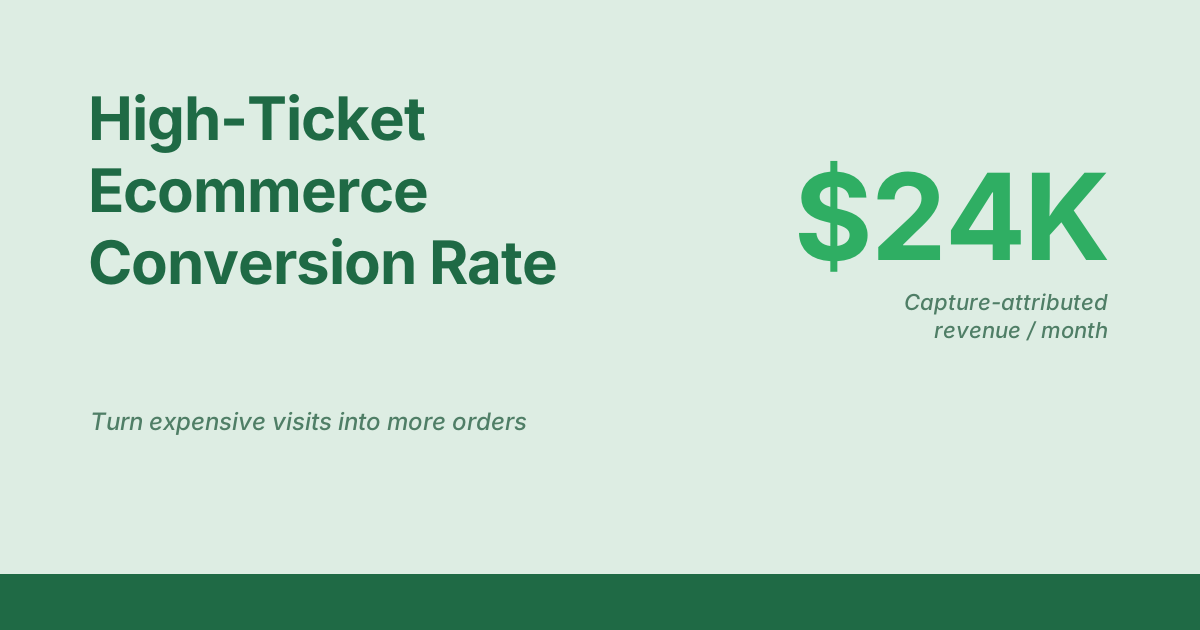
Turn expensive paid visits and long buying cycles into more orders without forcing shoppers to decide on their first session.
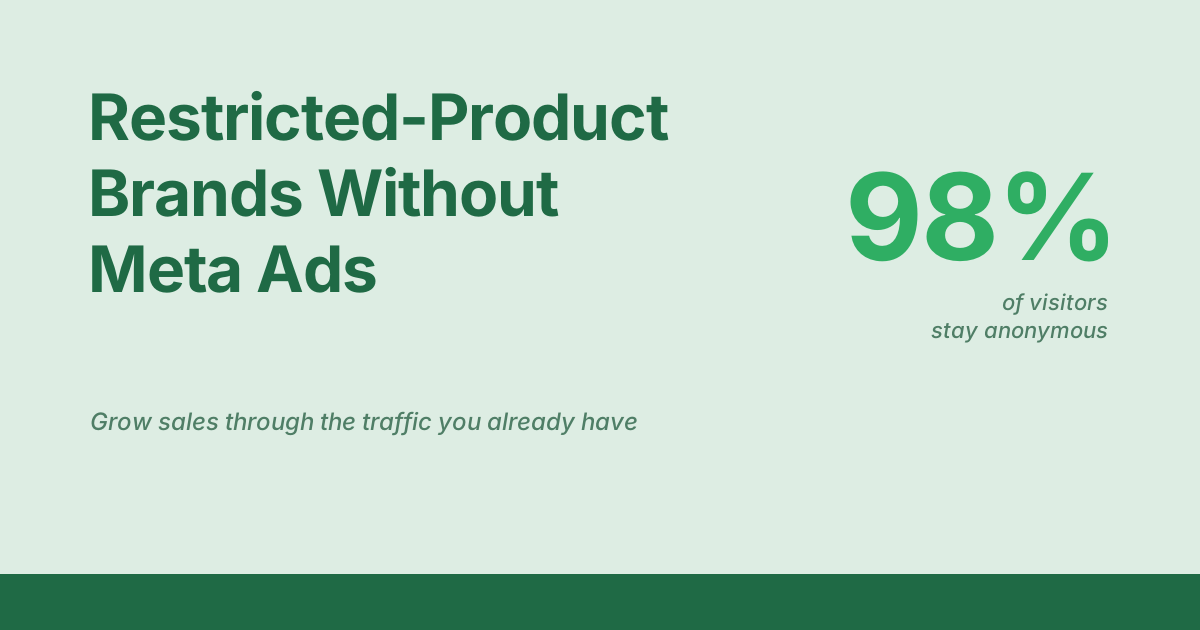
A practical growth plan for regulated and restricted ecommerce categories when paid social is limited, unstable, or unavailable.
Shopify's Abandoned checkouts page records qualifying late-stage sessions, not every cart left behind. Learn when Shopify creates a record, what is excluded, and where Capture and ReCapture fill the identity gap.
Klaviyo does not always require a Shopify customer login. Browser identity, forms, tracked clicks, and checkout contact can connect a cart event to a profile—but an old profile does not identify every future visit automatically.
A Shopify theme change can disable your Klaviyo or Omnisend app embed, remove Added to Cart tracking, hide signup forms, or alter consent load order. Diagnose the drop with a full event funnel and targeted app-embed, snippet, and identity tests.
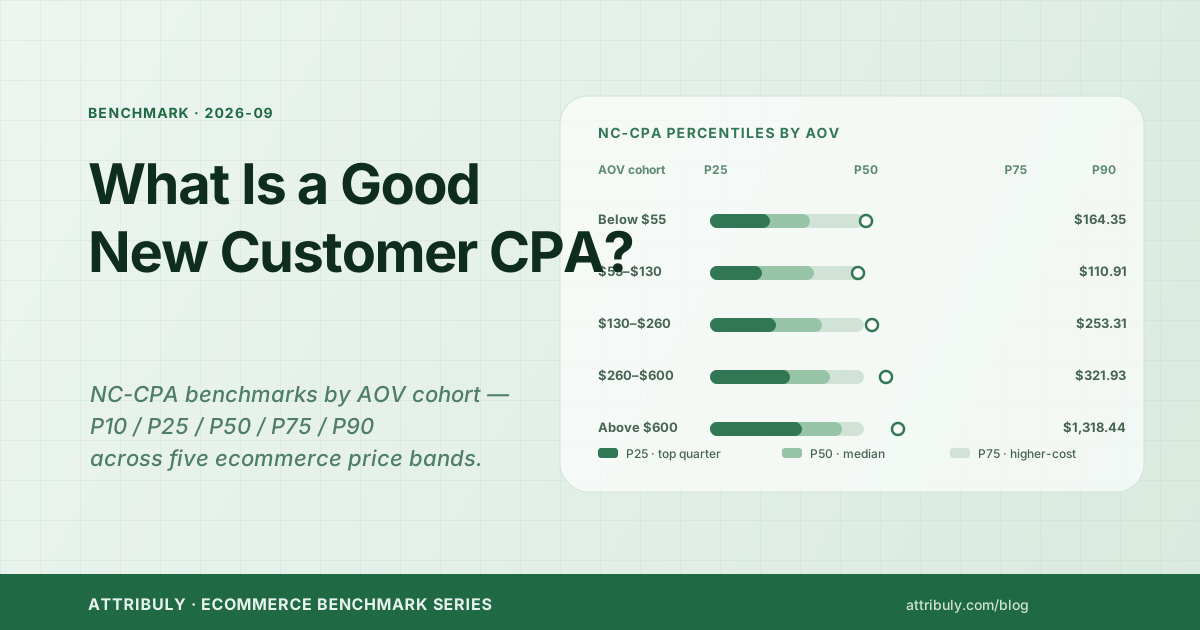
A $40 New Customer CPA can be excellent for one store and unsustainable for another. Compare NC-CPA percentiles by AOV cohort ($55–$130 median $34.95; above $600 median $277.65) and learn where your store stands against comparable brands.
The problem is often not “too few emails.” It is a mismatch: low-intent or inactive profiles keep receiving campaigns, while visitors who view products, add to cart, and return repeatedly never become eligible for a relevant flow.
A guest shopper may have a browser ID, cart token, checkout token, email, and eventual Shopify customer ID at different moments. The reliable solution is not one magical guest ID—it is a controlled identity map that knows when those signals can be joined.
Klaviyo may record Active on Site and Form Submitted for a profile while Shopify-branded Added to Cart and Checkout Started events remain missing. That usually points to an identity handoff between two event paths—not proof that every part of onsite tracking is broken.
Klaviyo can now backfill certain onsite events after identification, but only when the browser, consent, event type, storage window, and identification trigger meet its requirements. Here is what gets recovered, what does not, and how to test the full path.
A Klaviyo signup popup is the email-collection form that appears over a store page. An existing subscriber can see it again when Klaviyo cannot connect the current browser visit to that subscriber's profile. Here is how to identify whether the cause is audience targeting, consent, cookies, device switching, or an implementation error.
After teams already tried discount emails, SMS, exit-intent overlays, and checkout flows, the next recovery lift usually comes from checkout UX, profile reconnection, identity coverage, and cleaner stage-based treatments—not another overlay.
A $12 cart and a $150 checkout should not get the same abandoned-cart email. Use value, intent, margin, and reach to decide which carts deserve a reminder, a stronger sequence, an incentive, or no send.
Can Shopify, Klaviyo, Omnisend, or Privy email every cart abandoner? Learn the difference between identity and eligibility, which shoppers each platform can actually reach, and how to measure recovery coverage.
How Shopify brands can build a Klaviyo audience of people who abandoned a specific product in a specific cart, sync that audience to Meta retargeting, and extend coverage beyond already identified profiles.
Learn why paid conversions appear in Meta as attributed purchases while Shopify files the same orders under Direct or Unknown, how to diagnose the gap, and how to compare attribution without forcing two platforms to agree.

The most expensive shopper on your site is the one you never get a chance to email. That's a hard truth in consumer electronics, where a single abandoned cart can carry hundreds — sometimes thousands — of dollars...
Attribuly-identified anonymous visitor leads cannot currently be exported directly from the product as a standalone audience. Learn the current activation options via Klaviyo, Omnisend, Meta, and Google syncs, plus the manual export workaround.
Attribuly's identified anonymous visitor leads do not currently sync directly and automatically to Shopify. Learn the manual customer import workaround and supported activation paths via cartsee, Klaviyo, Omnisend, Meta, and Google audiences.

Your ad platforms say one thing. Your backend says another. If you've ever stared at a Meta dashboard showing a 4x return while your accountant calmly asks where the profit went, you already know the problem: mos...

Pros: Expands recovery reach beyond what ESP pixels see; works with the Klaviyo flows you already built; surfaces recovered revenue from previously invisible shoppers. Cons: Best suited to Shopify-first stacks; public...

Attribuly integrations dashboard showing the Klaviyo integration card and connection status Results are directional rather than guaranteed — Attribuly's case studies are vendor-reported — but they're consist...

Here's a scenario most Klaviyo store owners recognize: a shopper lands on your site from a TikTok ad, browses three products, adds one to cart, then closes the tab. If they never clicked a Klaviyo email link or s...

Online merchants face an increasingly tough landscape. Between Apple's iOS privacy updates, Safari ITP restrictions, and steadily rising customer acquisition costs (CAC), up to 98% of e-commerce store traffic lea...

High-growth Shopify DTC brands operate in a challenging acquisition environment. With browser privacy updates, link tracking protection, and cookie decay causing site bounce rates to hover around 90%, brands spend hea...

For modern direct-to-consumer (DTC) brands, customer acquisition cost (CAC) has soared while tracking fidelity has plummeted. E-commerce teams spend substantial ad budgets driving high-intent shoppers to product pages...

When a customer discovers your online store through a TikTok ad on their phone during lunch, browses product pages anonymously on a laptop later that evening, and finally completes a purchase three days later via a gu...

Modern Direct-to-Consumer (DTC) brands face a severe structural challenge: online customer journeys have become fragmented beyond recognition. A single customer might discover a product via an Instagram ad on an iPhon...

The landscape of digital acquisition for e-commerce brands has undergone a seismic shift. For years, direct-to-consumer (DTC) merchants on Shopify relied heavily on third-party cookies and client-side browser scripts...

For over a decade, digital retail relied on a simple mechanism: drop a third-party tracking pixel on a user's browser, watch them navigate the web, and target them with surgical precision across advertising chann...

Across most online businesses, roughly 95% to 98% of website traffic arrives, browses, and departs without leaving a trace. They do not fill out a lead form, subscribe to a newsletter, or complete a purchase. In tradi...
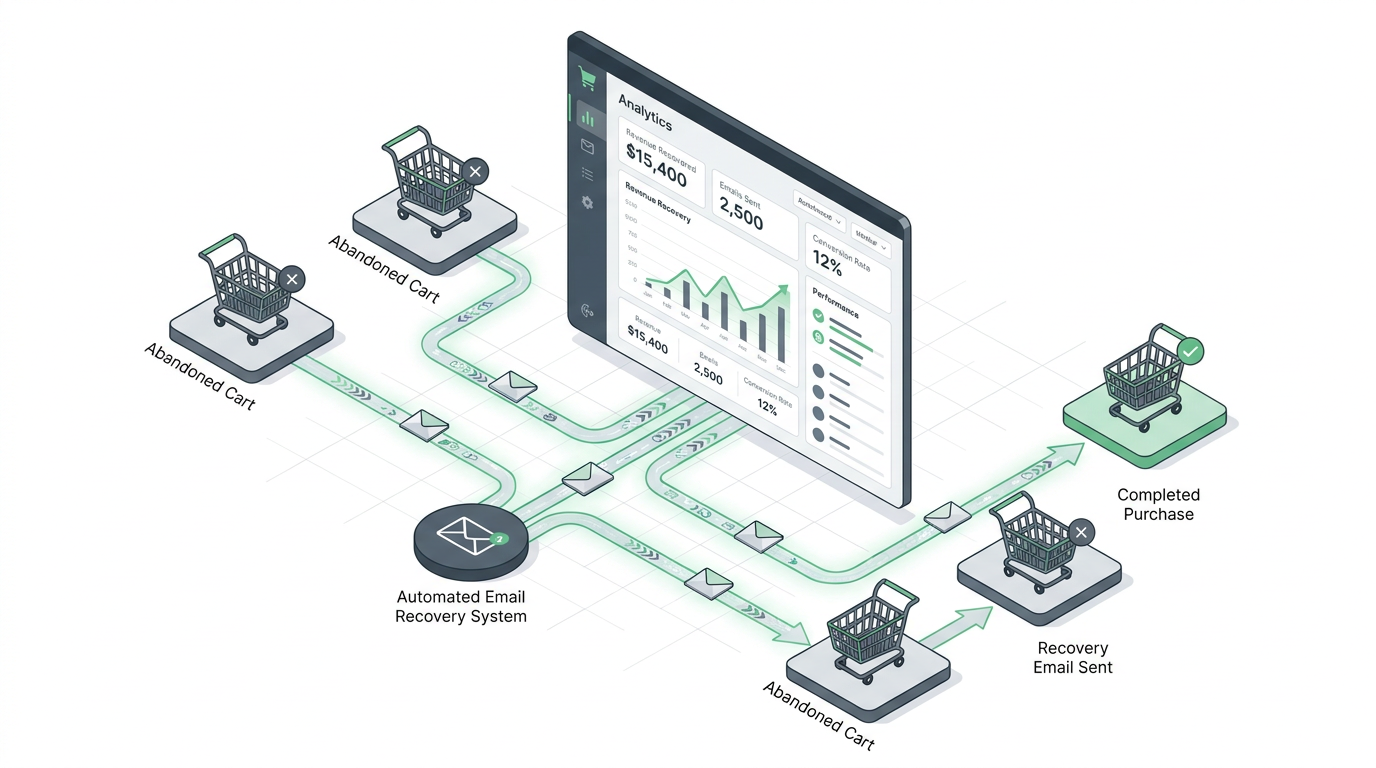
Cart abandonment remains one of the largest revenue leaks in direct-to-consumer (DTC) e-commerce. Across global retail, roughly seven out of every ten shoppers who add items to a digital cart exit without completing t...

Every day, nearly 70% of online shoppers add products to their carts or start entering checkout details, only to leave without completing their purchase. For digital store owners, this represents a significant leak in...

Every lifecycle marketer running an e-commerce store knows the feeling of inspecting Klaviyo flow reports and seeing stellar numbers. A 3.33% placed order rate, a $3.65 Revenue Per Recipient (RPR), and high open rates...

Implementing a Visitor Identification (Visitor ID) or identity resolution solution fundamentally transforms how an e-commerce store recognizes on-site shoppers. Standard client-side tracking scripts, such as standard...

Shopping cart abandonment remains the single largest source of lost revenue for online retailers. Every day, thousands of interested shoppers browse products, add items to their carts, and then click away without purc...

Over seven out of every ten online shopping carts are abandoned before a transaction is completed. For direct-to-consumer (DTC) brands and e-commerce merchants, this represents the single largest source of lost revenu...

Every e-commerce merchant knows the frustration of watching high-intent shoppers add products to their carts only to vanish before clicking "Complete Purchase." Across global e-commerce, Baymard Institute&ap...

Online merchants face an ongoing challenge: high traffic numbers often hide a significant leakage in the sales funnel. Millions of digital shoppers add products to their carts daily, only to abandon them before comple...

Cart abandonment remains the single largest profit leak for online retailers. E-commerce store owners spend thousands of dollars driving targeted traffic through Meta, TikTok, and Google Ads, only to see roughly 70% o...

Every e-commerce merchant knows the pain: a buyer browses your catalog, selects items, adds them to their cart, and moves to the checkout page—only to vanish before clicking "Pay Now." According to consolida...

Every day, thousands of high-intent shoppers visit online storefronts, scroll through product collections, add items to their carts, and vanish without leaving a trace. For the average Shopify merchant, direct-to-cons...

More than 97% of the users who browse your website leave without filling out a form, signing up for a newsletter, or completing a purchase. For growth teams, digital marketers, and revenue operations leaders, this un-...
The best Klaviyo email marketing programs for Shopify combine clean data, high-intent flows, disciplined segmentation, deliverability guardrails, and revenue measurement.
First-party data for Shopify is the customer and behavior data a merchant collects directly through owned storefront, checkout, email, SMS, support, loyalty, and purchase interactions.
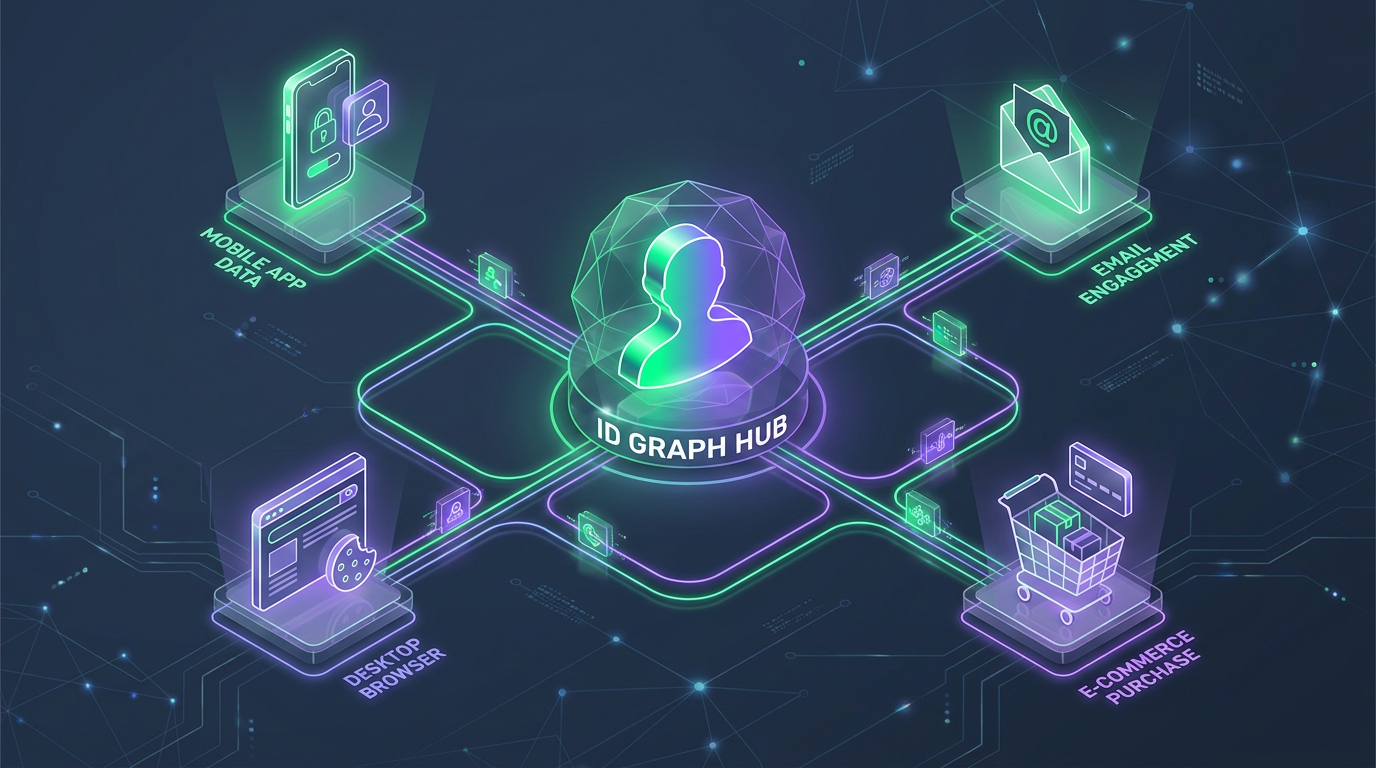
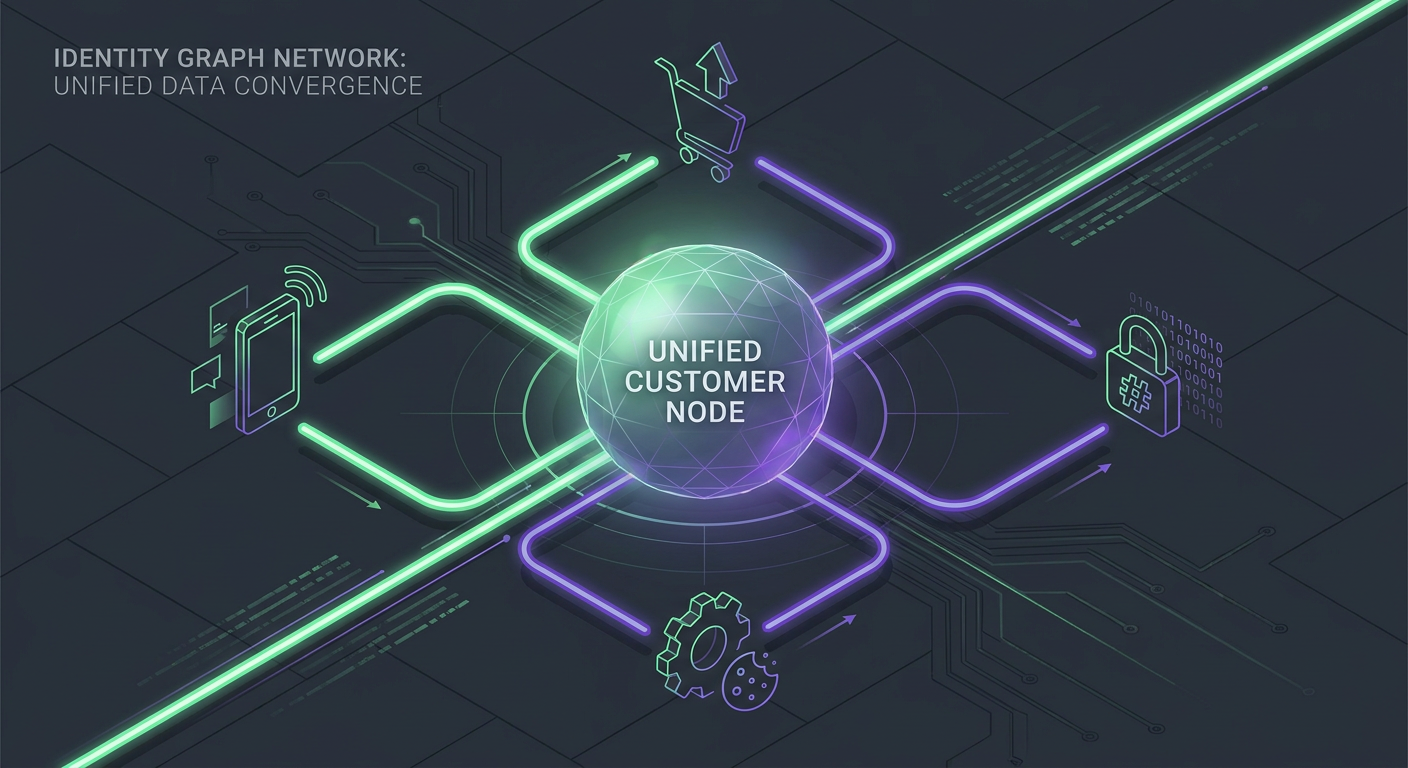
An identity graph is a structured map of identifiers and relationships that helps ecommerce teams decide whether multiple signals belong to the same shopper.
Website visitor tracking tells you what happened on your site; visitor identification connects eligible anonymous sessions to reachable shopper profiles so Shopify teams can act on that behavior.
Learn what analytics tools can show, what identification can reveal, and how ecommerce stores can identify more high-intent shoppers responsibly.
Learn how B2B website lead tracking differs from ecommerce visitor identification, customer recognition, and Shopify shopper recovery workflows.
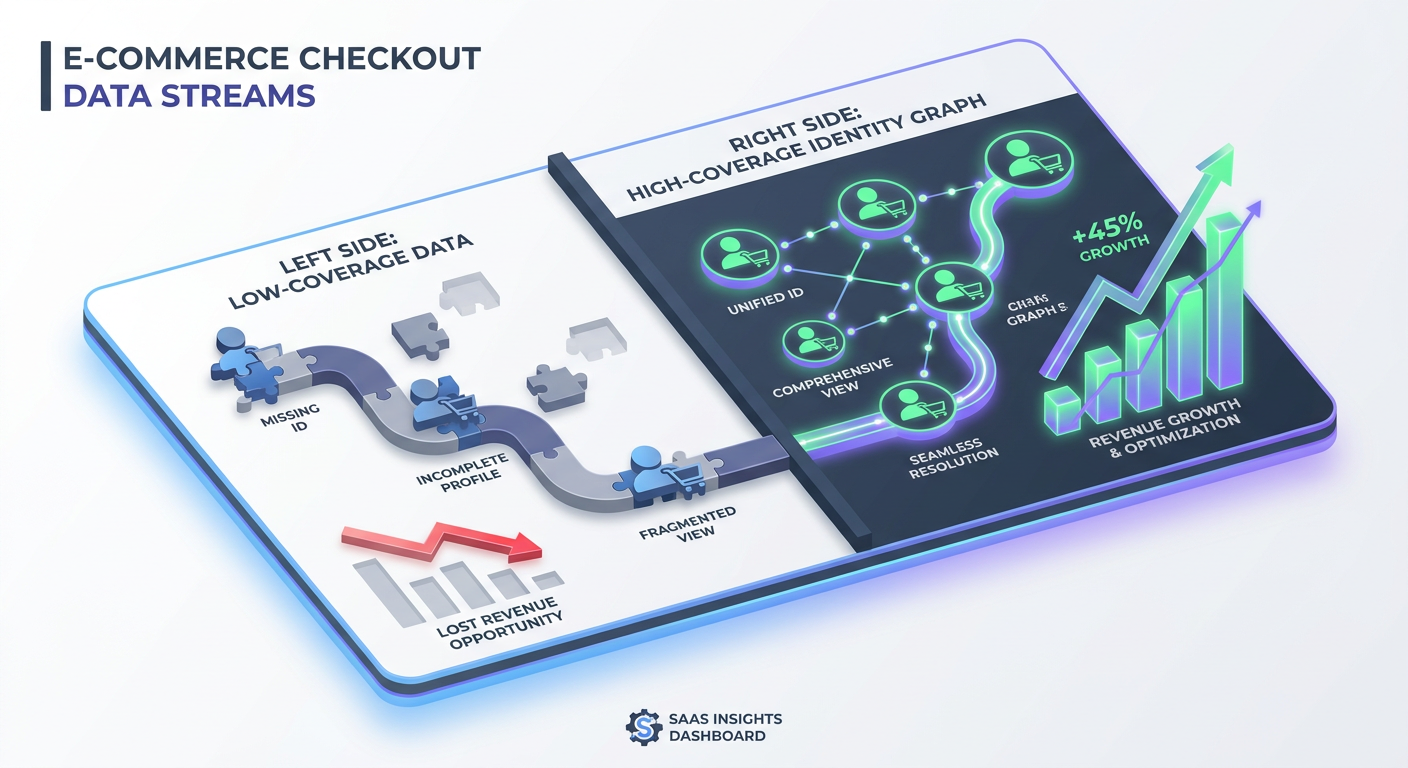
Compare the best website visitor identification software for ecommerce, including tools for anonymous shopper ID, Klaviyo recovery, and B2B lead tracking.

Learn how to identify website visitors, what data you can actually see, and how Shopify stores can turn more anonymous shopping sessions into reachable Klaviyo profiles.
Learn what visitor identification is, how it works for Shopify stores, and whether it's right for your setup. Covers match rates, tools, Klaviyo integration, and real results.
Your Klaviyo list has thousands of subscribers. But when most of them visit your store, Klaviyo can't see them, so your flows never trigger. Here's why, and how to fix it.
Identification Rate tells you what percent of shoppers at each funnel event are reachable by email. Learn how to calculate it, why it matters, and how to use it to forecast recovery revenue.
Set up Attribuly ReCapture with Klaviyo in under 30 minutes. This guide covers Shopify installation, API connection, flow verification, and monitoring your results.
ReCapture recovers revenue from existing Klaviyo subscribers your pixel is missing. Capture identifies new anonymous visitors. Learn the difference and which to start with.
ReCapture identifies existing Klaviyo subscribers whose on-site behavior is invisible to your ESP, so your abandoned cart flows reach more of the people already on your list.
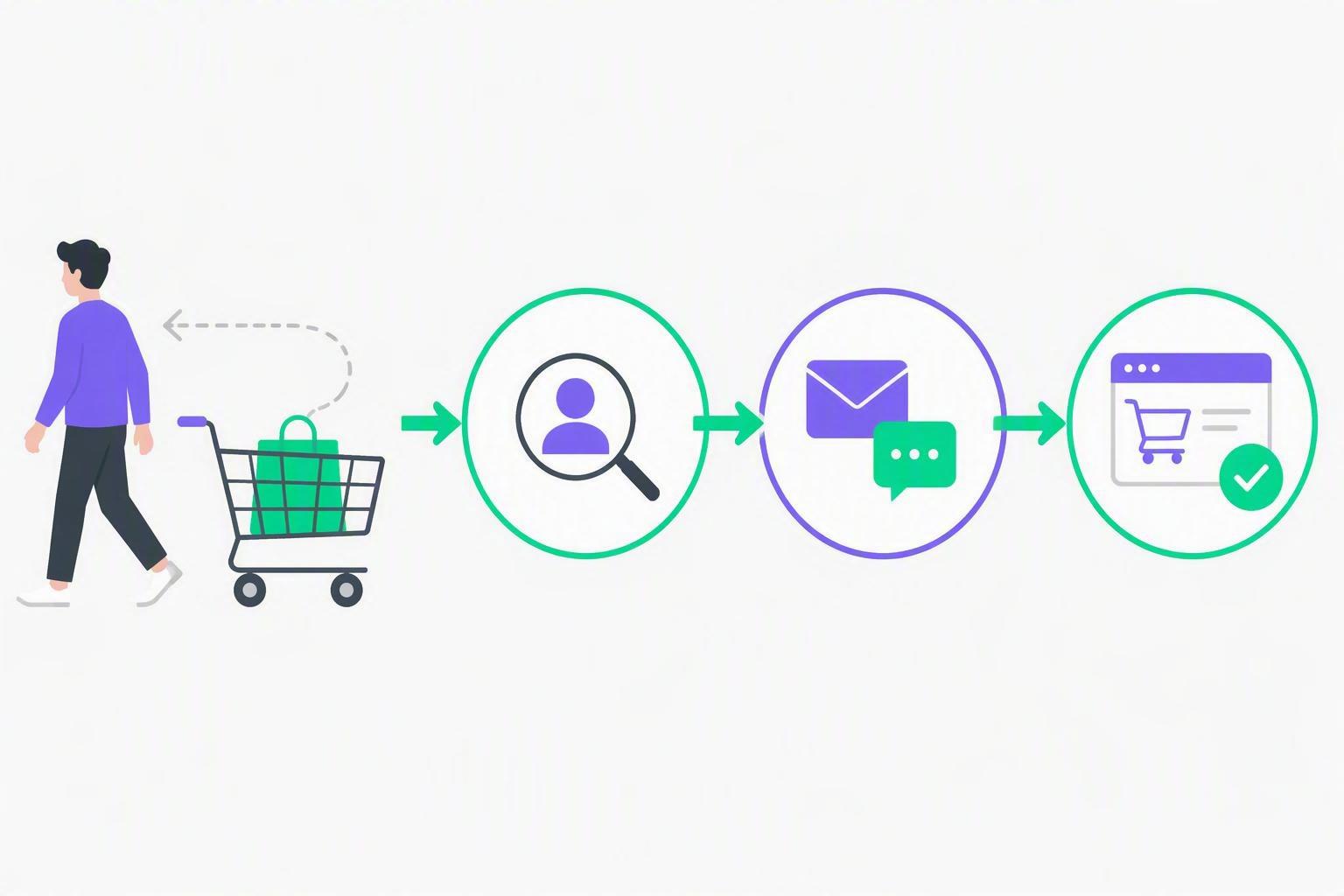
Learn how Shopify stores recover more abandoned carts in 2026. Covers identification coverage, Klaviyo flow setup, email optimization, and visitor identification tools.
The best abandoned cart email subject lines get opened. Here are 50+ real examples, categorized by strategy, with open rate data and what makes each one work.
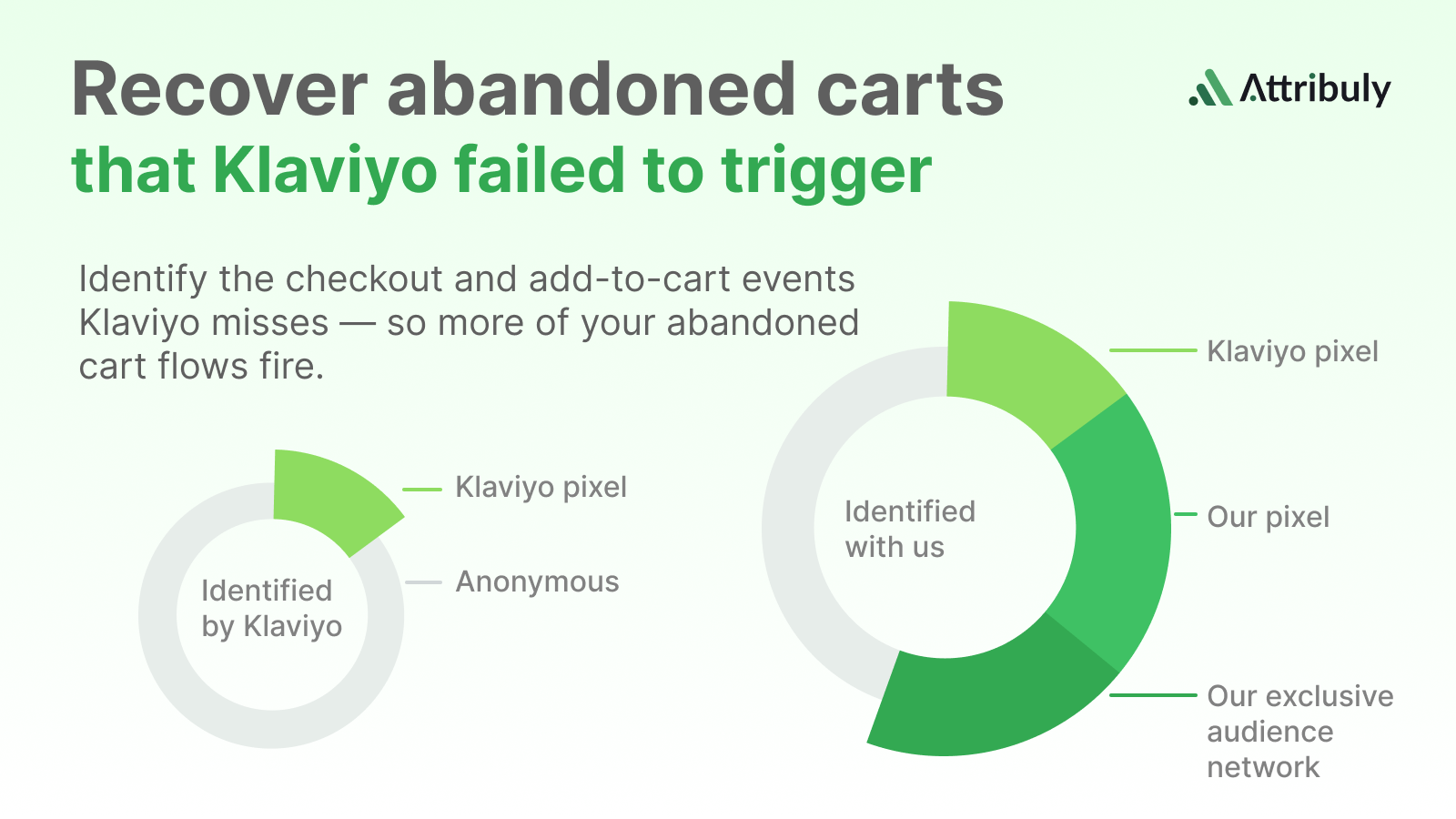
Your Klaviyo abandoned cart flow is working — but it's only reaching about 14% of the people who actually abandoned their cart. Here's what's happening and how to fix it.
The average cart abandonment rate is 70%. Here are 12 proven tactics Shopify stores use to reduce cart abandonment and recover more of the revenue they're already losing.
Cart abandonment is when a shopper adds products to their cart but leaves without purchasing. Learn what causes it, how much it costs, and what Shopify stores can do about it.
Browse abandonment subject lines are different from cart abandonment subject lines. Here are 30 examples with what works, what to avoid, and how to reach more browse abandoners.
Free abandoned cart email templates for Shopify. Includes 3-email sequences for standard cart abandonment, checkout abandonment, and high-AOV stores — with subject lines, timing, and copy structure.
15 real abandoned cart email examples with analysis of what makes each one work — subject lines, design, copy, CTAs, and timing strategies from top-performing Shopify brands.
The complete abandoned cart email best practices checklist for 2026 — covering flow trigger rate, email timing, subject lines, content, discounting, and deliverability.
How many abandoned cart emails should you send, and when? Here's the timing data for standard cart abandonment, checkout abandonment, and high-AOV products.
Abandoned cart recovery is the process of re-engaging shoppers who add to cart but don't purchase. Learn what it is, what methods exist, and why most stores recover far less than they could.
The average cart abandonment rate is 70-75%. Learn what's driving yours, how to benchmark against your industry, and the two-part strategy to bring it down.
Cart abandonment solutions range from checkout optimization to email automation and visitor identification. Compare the tools and strategies with the highest ROI for Shopify stores.
How to set up and optimize a Shopify abandoned cart email flow in Klaviyo — from initial configuration to advanced optimization and common setup mistakes to avoid.
An effective abandoned cart email strategy addresses three layers: reach, sequence structure, and content. Here's a proven framework for Shopify stores to recover more abandoned cart revenue.
Basket abandonment happens when a shopper adds items to an online basket but leaves without purchasing. Learn what it is, why it happens, and how UK and EU ecommerce stores recover it.
Retention marketing keeps existing customers buying again. Learn what it is, why it matters, and the core strategies DTC and Shopify brands use to build retention systems.
Customer retention determines profitability for DTC brands. Here are 8 proven strategies to improve customer retention on Shopify — from email flows to loyalty programs.
A step-by-step guide to recovering abandoned carts on Shopify — covering flow setup, reach expansion, retargeting, and the most common reason cart recovery underperforms.
Most Shopify store visitors remain completely anonymous. Learn how to identify who is visiting your website, what tools are available, and how to turn anonymous visitors into reachable contacts.
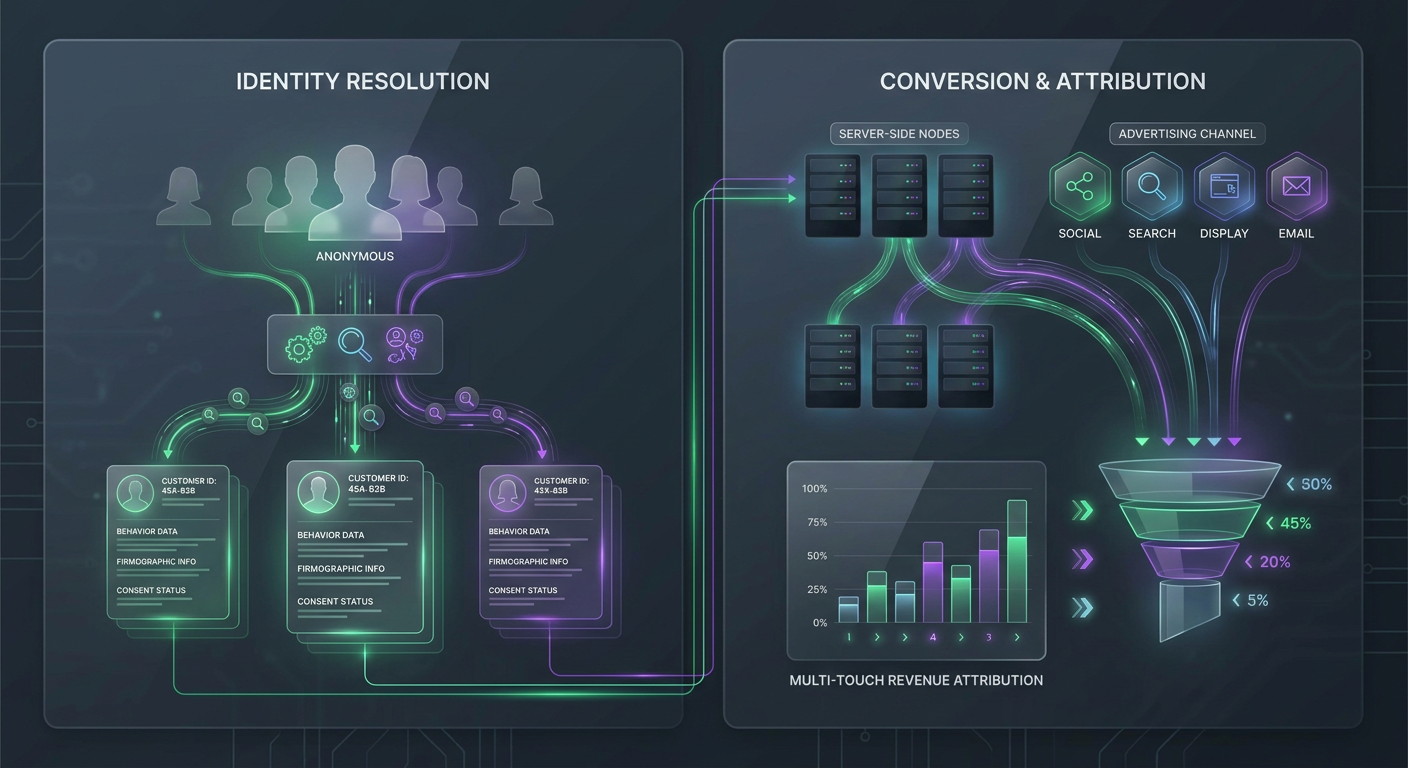
Identity resolution connects anonymous website behavior to known customer profiles. Learn what it is, how it works for ecommerce, and why it's the foundation of personalized retention marketing.
People-based marketing targets specific known individuals instead of demographic segments. Learn how Shopify DTC brands implement identity marketing strategies with first-party data.
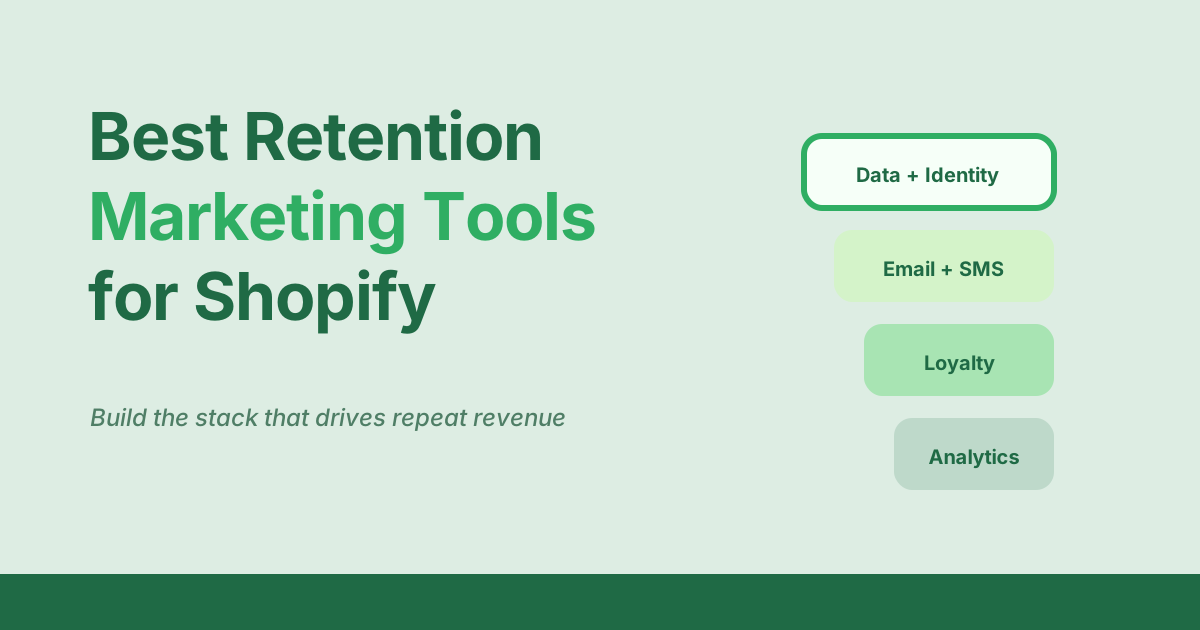
Compare the best retention marketing tools for Shopify stores in 2026 — from identity resolution and abandoned cart recovery to loyalty programs and customer lifecycle email platforms.
Retention-focused DTC brands engage customers fundamentally differently than acquisition-first brands. Learn the key differences in strategy, data, and messaging.
Most website visitors leave without buying and without leaving contact information. Learn the proven methods Shopify stores use to turn anonymous visitors into paying customers.
Email lead generation for ecommerce goes beyond popups. Learn how Shopify stores build high-intent email lists using behavioral identification, checkout capture, and content-based methods.
Website demographics tools reveal who is visiting your site — age, location, industry, and more. Compare the best tools for Shopify stores and B2B sites in 2026.
Learn how abandoned cart email automation actually works in Klaviyo, why flows fail to trigger, and how to fix the behavior data gap without rebuilding your flows.
Abandoned cart email marketing is the highest-ROI channel in ecommerce — but most stores only see a fraction of its potential. Learn what drives results in 2026.
Checkout abandonment and cart abandonment are different events with different causes and different fixes. Learn how to set up separate Klaviyo flows for each.
Klaviyo can only trigger abandoned cart emails when it receives the right behavior data. Learn why up to 85% of shopper behavior never reaches Klaviyo, and how to close the gap.
A high recovery rate doesn't guarantee high recovered revenue. Learn the difference between these two metrics and why most Shopify stores optimize the wrong one.
A complete checklist for setting up Shopify email abandoned cart recovery in 2026 — from checkout configuration to Klaviyo flow structure to behavior data completeness.
Beyond the standard 70% abandonment rate, this data deep-dive covers email reach, Klaviyo flow trigger rates, and the data gap most abandoned cart statistics ignore.
Opensend identifies anonymous visitors. Klaviyo native flows send the emails. Learn what each actually solves, where the gap remains, and how to close it.
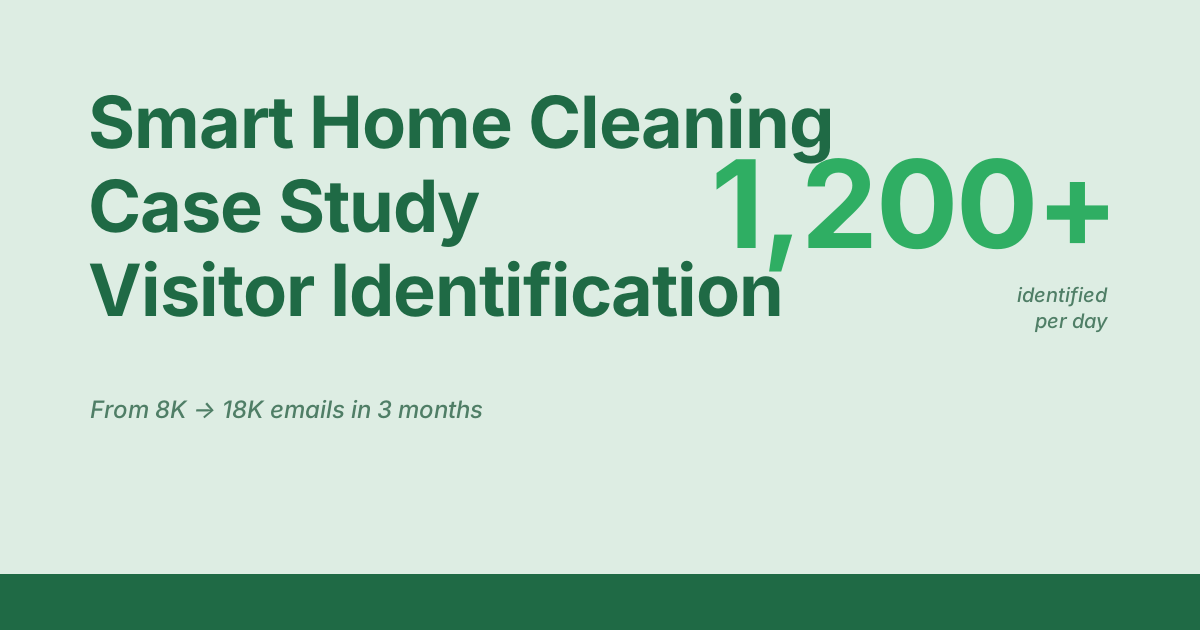
A DTC robot vacuum brand used visitor identification to capture 1,200+ anonymous shoppers per day, grow their Klaviyo email list from 8K to 18K, and reduce retargeting CPA by 38%.
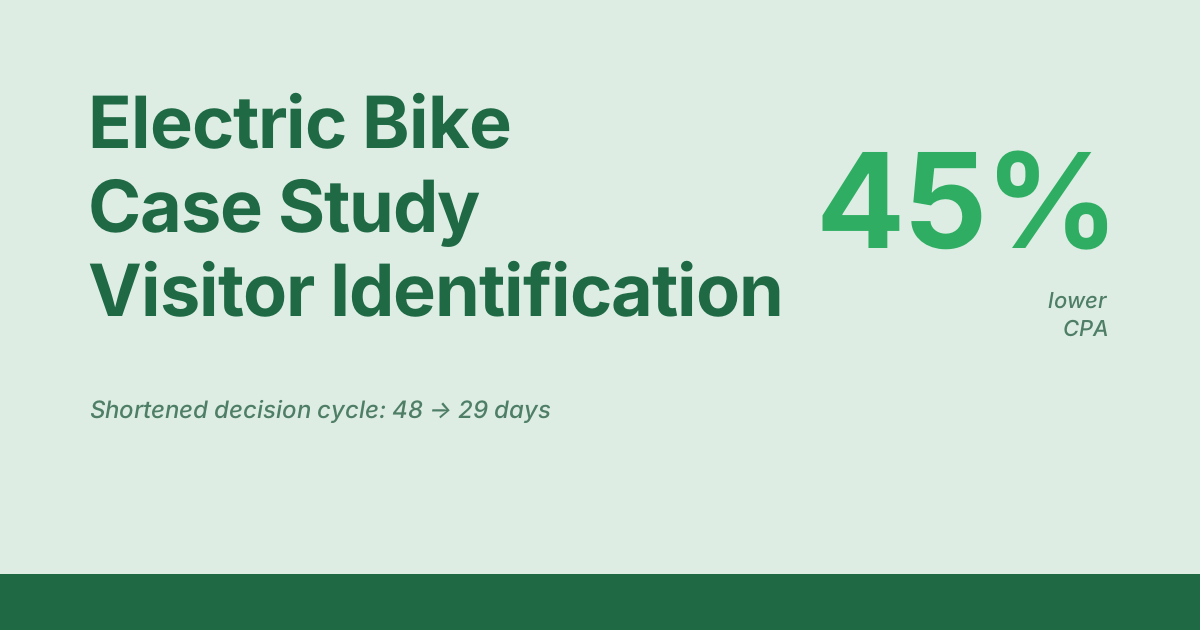
A DTC e-bike brand ($1,299–$1,999) used visitor identification to capture 2,800+ anonymous shoppers monthly, enroll them into Klaviyo flows, reduce CPA by 45%, and shorten purchase decisions by 40%.
Prime Day will spike your Shopify traffic. But 98% of visitors will leave anonymous. Learn how visitor identification recovers the ad spend you'd otherwise lose — plus a limited-time Capture promotion.
Cart abandonment gets all the attention. But browse abandonment — shoppers who view products without adding to cart — is 10-20× larger. Learn how to identify and recover them.
Acquiring a new customer costs 5-7× more than retaining one. Learn how Shopify DTC brands build repeat purchase flows, loyalty triggers, and post-purchase sequences that grow customer lifetime value.
Set up Attribuly Capture and connect it to Klaviyo in less than 30 minutes. This step-by-step guide covers installation, Klaviyo integration, flow configuration, and monitoring.
BFCM is the highest-traffic week of the year — and the highest-abandonment week. Prepare your Shopify cart recovery now with visitor identification, Klaviyo flow optimization, and server-side tracking.
Fashion has unique abandonment patterns — size uncertainty, color comparison, multi-item carts. Learn how fashion Shopify brands recover more abandoned carts with identification and tailored flows.
Evaluating visitor identification tools for your Shopify store? This buyer's guide covers what to look for, how to compare vendors, what to expect, and which questions to ask before committing.

Looking for Instant.one alternatives for Shopify? Instant.one combines visitor identification with AI-generated emails and positions its AI retention capabilities as an alternative to traditional email marketing workflows. If you want similar capabilities without replacing your Klaviyo setup—or need additional features such as abandoned cart event recovery, server-side tracking, and multi-touch attribution—here are the alternatives worth evaluating.

Customers.ai emphasizes identification accuracy and Klaviyo deliverability. If you need capabilities beyond identification — like AI email recovery, server-side tracking, or conversion signal enrichment — here are the alternatives.

Popups are the default email capture method for Shopify stores. But they only convert 2-5% of visitors. Here are the methods that grow your list faster — including some that work on visitors who never interact with a popup at all.

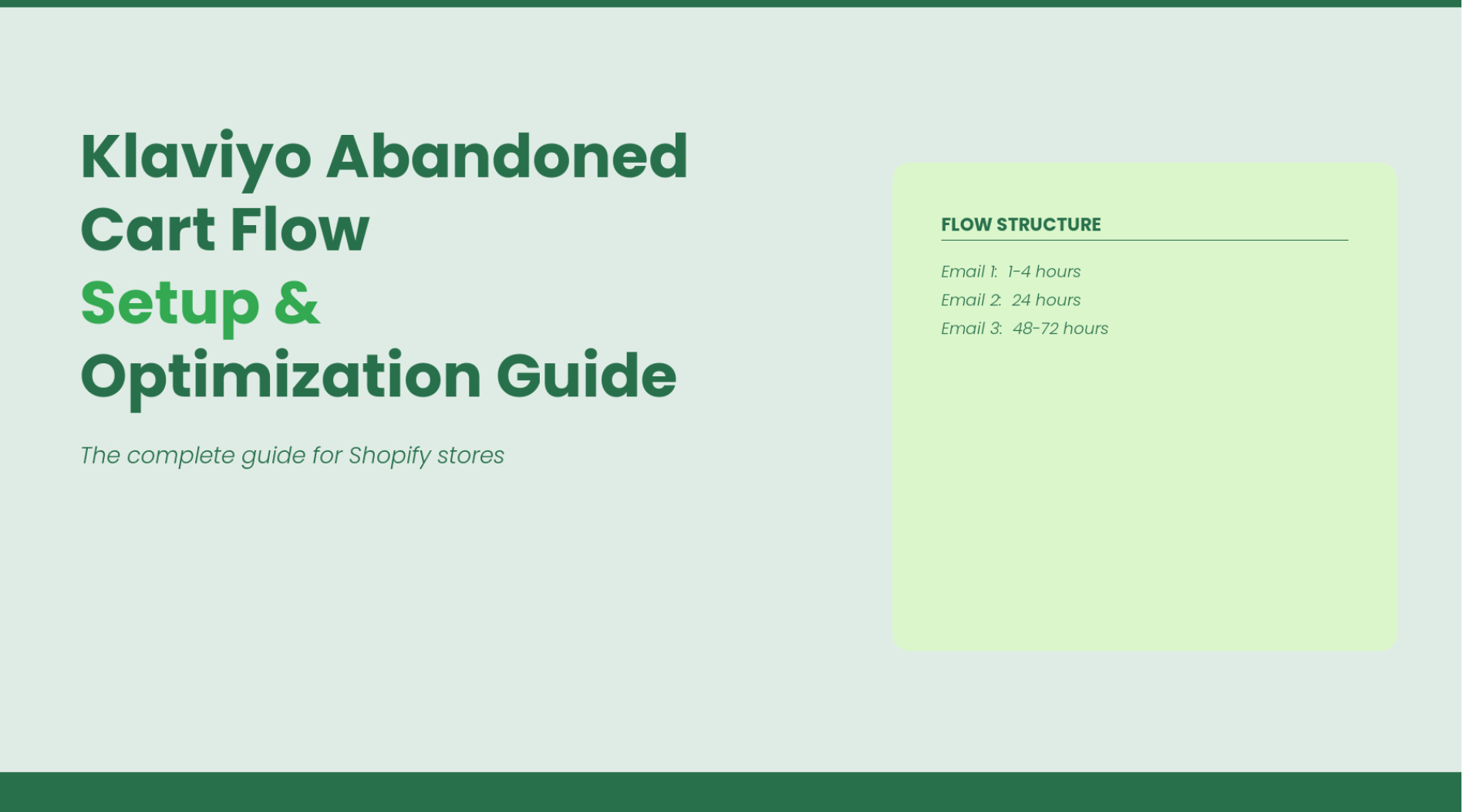
Your Klaviyo abandoned cart flow is likely your highest-revenue email automation. This guide covers setup, timing, content, and how to expand its reach beyond the shoppers Klaviyo can natively identify.

Most Shopify stores recover less than 5% of abandoned carts. The right apps can double or triple that number — not by sending better emails, but by reaching more abandoners in the first place.

The average Shopify cart abandonment rate is approximately 70%. Some abandonment is inevitable — but much of it is preventable, and most of what remains is recoverable.

A recovered $20 order and a recovered $200 order require different recovery strategies. Here is why high-AOV Shopify stores need a specialized approach — and what to do about it.

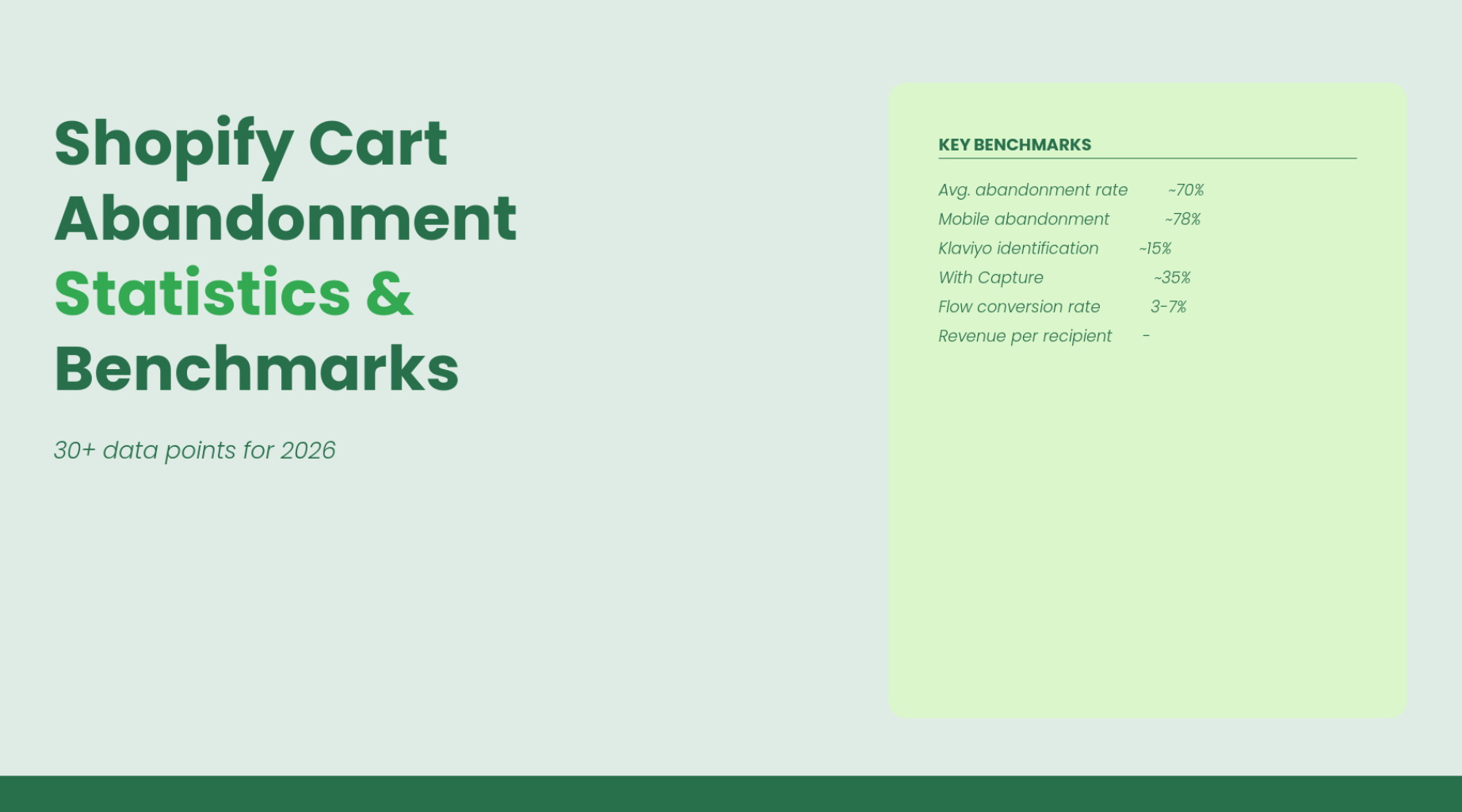
30+ data points on cart abandonment rates, recovery benchmarks, and identification coverage — compiled for Shopify and DTC brands making decisions about their recovery strategy in 2026.

A Shopify consumer healthcare brand used visitor identification to capture over 20,000 anonymous shoppers, dramatically increase email engagement, and drive measurable revenue growth — all within three months.
Most Shopify stores recover fewer than 5% of abandoned carts through Klaviyo. The problem is usually not the emails — it is how many shoppers the emails can reach.

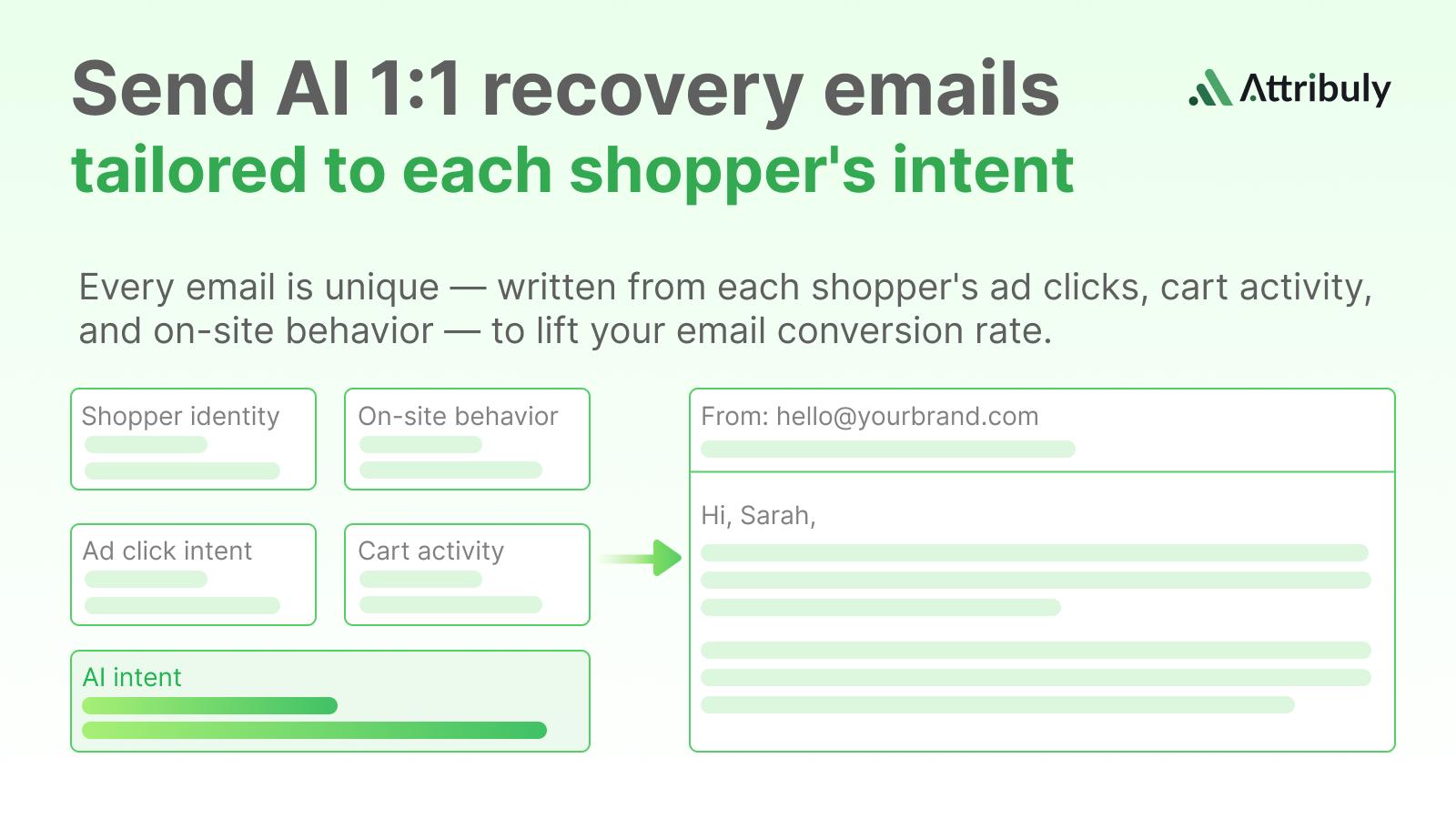
Standard abandoned cart emails send the same message to every shopper. AI email recovery generates a different email for each person based on what they did on your store.
Retention marketing is how Shopify stores recover lost shoppers, grow email revenue, and turn one-time buyers into repeat customers — without spending more on ads.
Opensend identifies anonymous website visitors for ecommerce stores. But depending on what you need beyond identification, there may be a better fit. This guide compares the top alternatives.

Brand T did not rewrite their Klaviyo flows. They did not redesign their emails. They simply identified more shoppers — and let their existing recovery system do the rest.

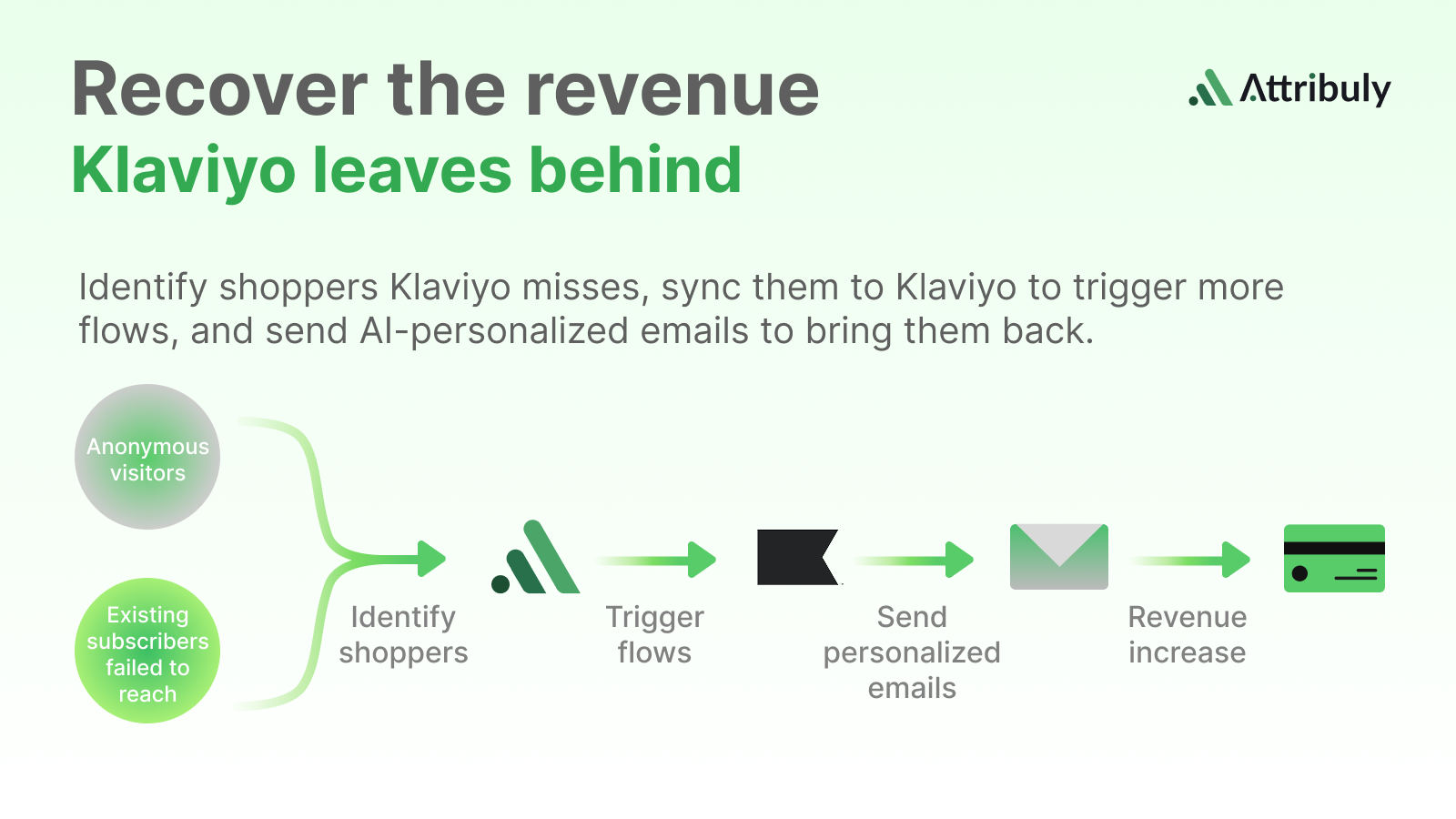
Klaviyo's abandoned cart flow is one of the most effective email automations in ecommerce. But it only works for shoppers Klaviyo can identify. Here is how to recover more.
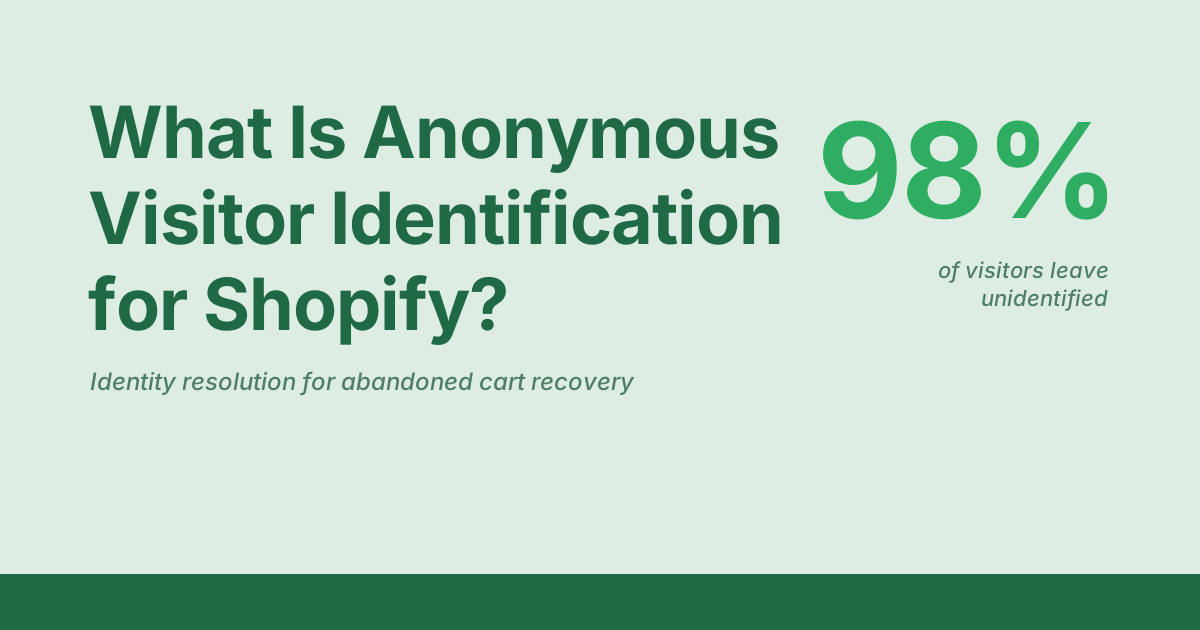
Anonymous visitor identification helps Shopify stores match unknown website visitors to email addresses — so more shoppers can enter recovery flows and retargeting audiences.
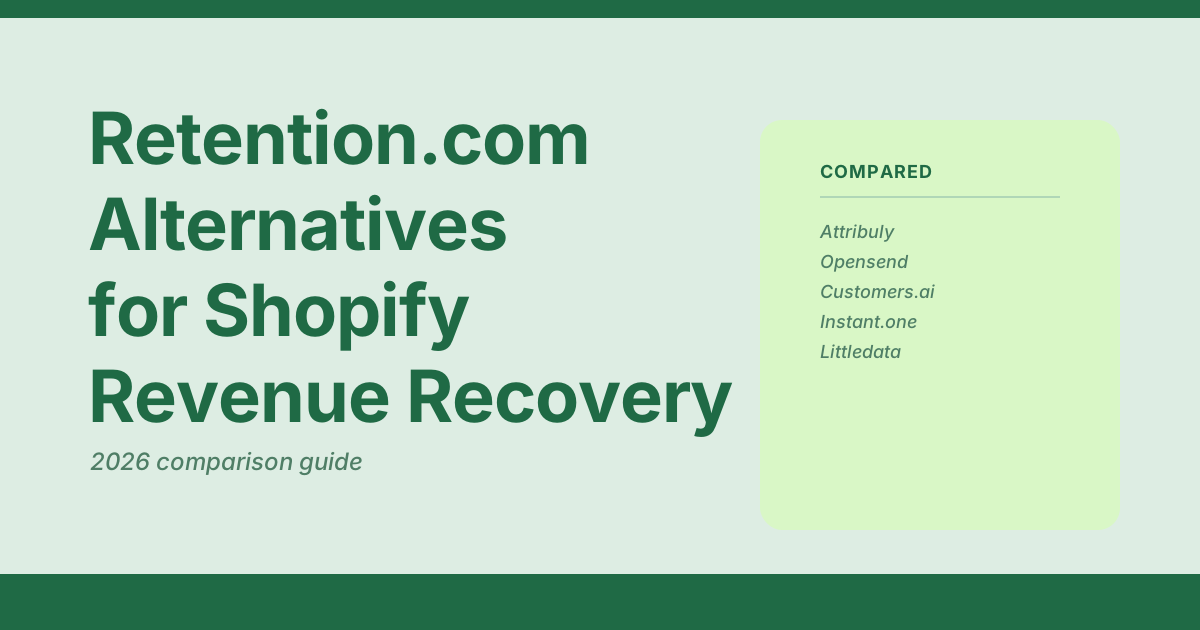
Compare visitor identification and revenue recovery tools for Shopify stores — including what Retention.com does well, where it falls short, and what other options exist.

Learn why Klaviyo can only send recovery emails to about 15% of cart abandoners, what causes the gap, and how Shopify stores can identify and recover more lost shoppers.

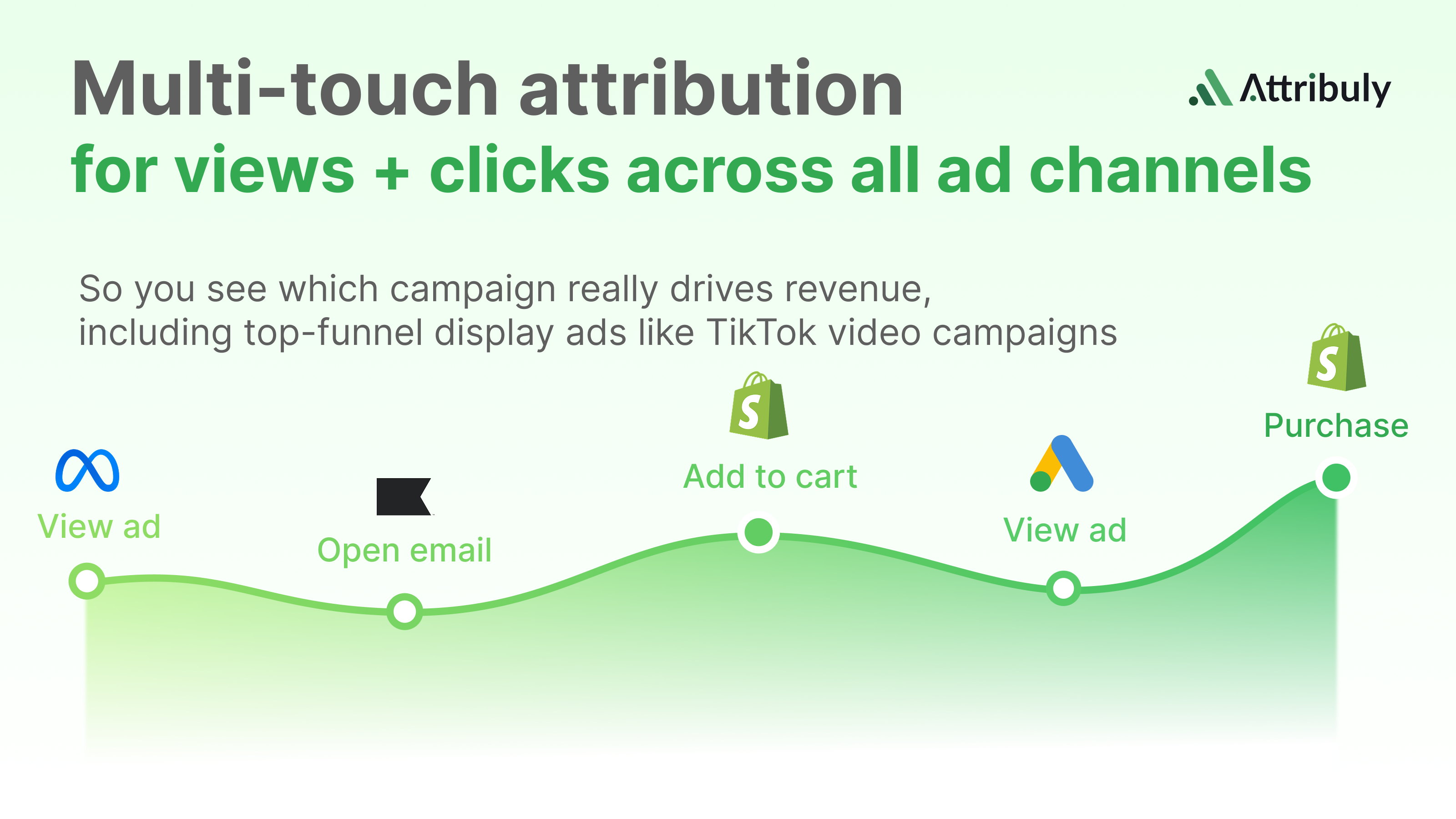
Multi-touch attribution helps you compare channels and campaigns fairly across the full customer journey. Learn how to break down performance, stress-test attribution models, and avoid last-click budget mistakes.

GA4 is great for behavioral analytics. Attribuly is built for ecommerce marketing ROI and budget decisions. Learn the differences, and when Web Analysis and Full Impact attribution matter.

Ad platform metrics explain what happened on-platform. Goal-based attribution reporting helps you compare campaigns, ad sets, and ads by conversions and conversion value—under a consistent attribution model and primary goal.

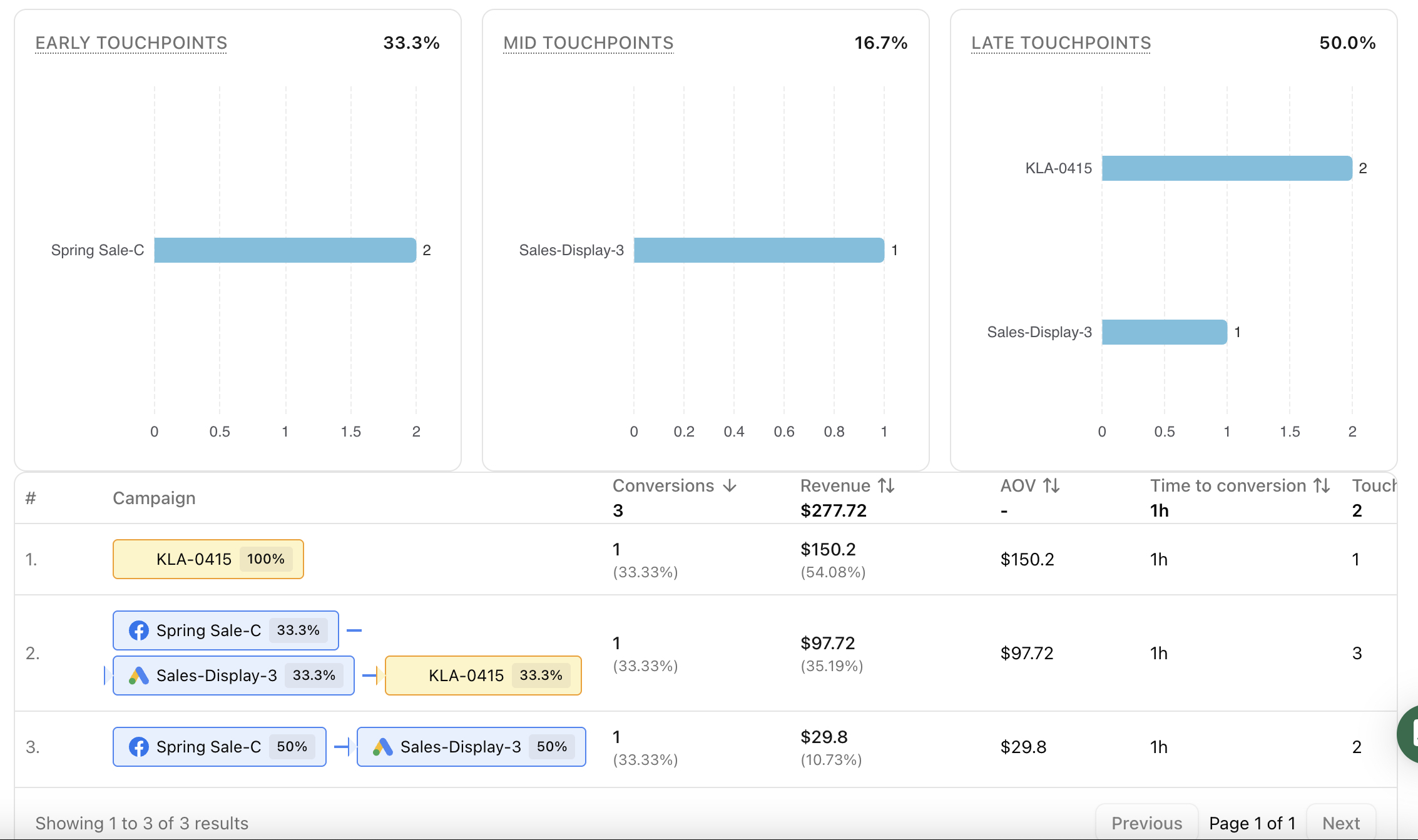
Conversion path analysis shows how channels and campaigns work together across touchpoints. Learn how to interpret paths, time to conversion, touch points count, AOV, and Sankey flows for better budget decisions.

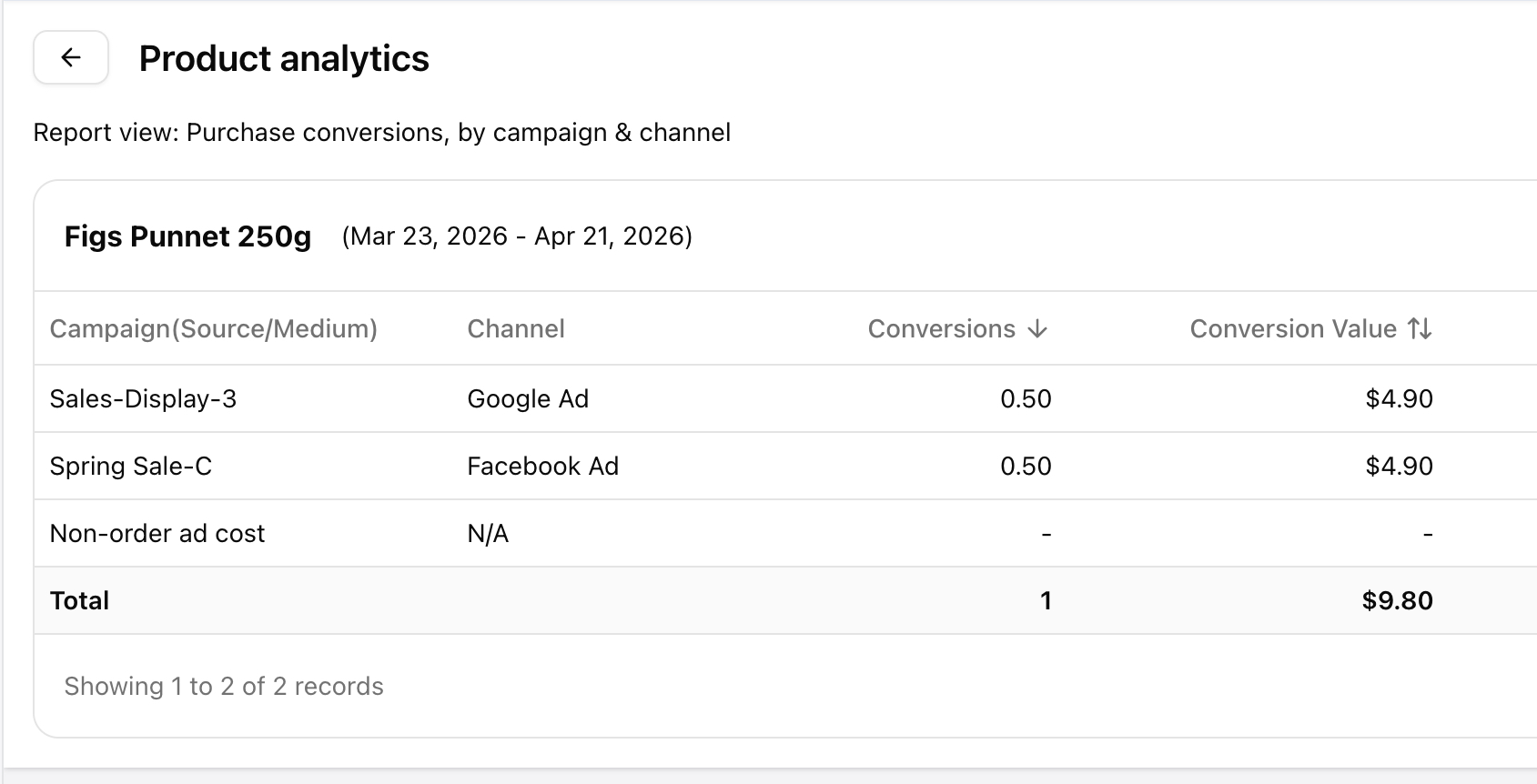
Use product analytics to diagnose where shoppers drop off: product views, add to cart, checkout stages, purchases, revenue, CPA, ROAS, and new customer ROAS. Turn product performance data into actions.

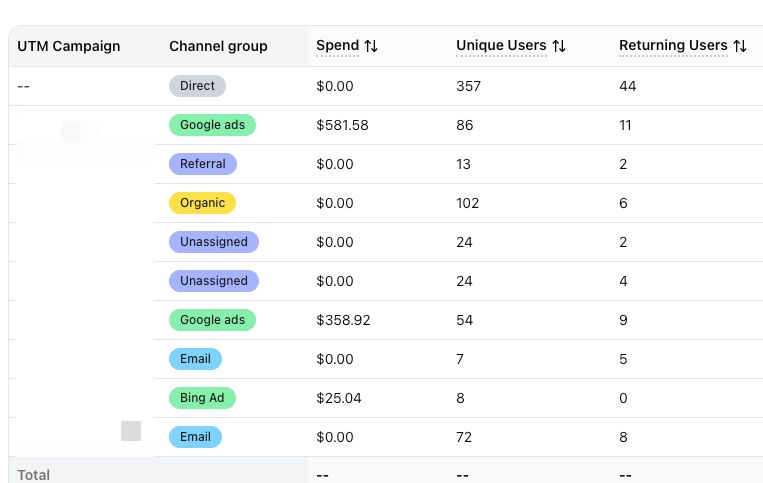
Learn a practical web analytics framework to diagnose performance using spend, unique users, engagement rate, add to cart, purchases, and revenue—then decide what to fix before changing budget.

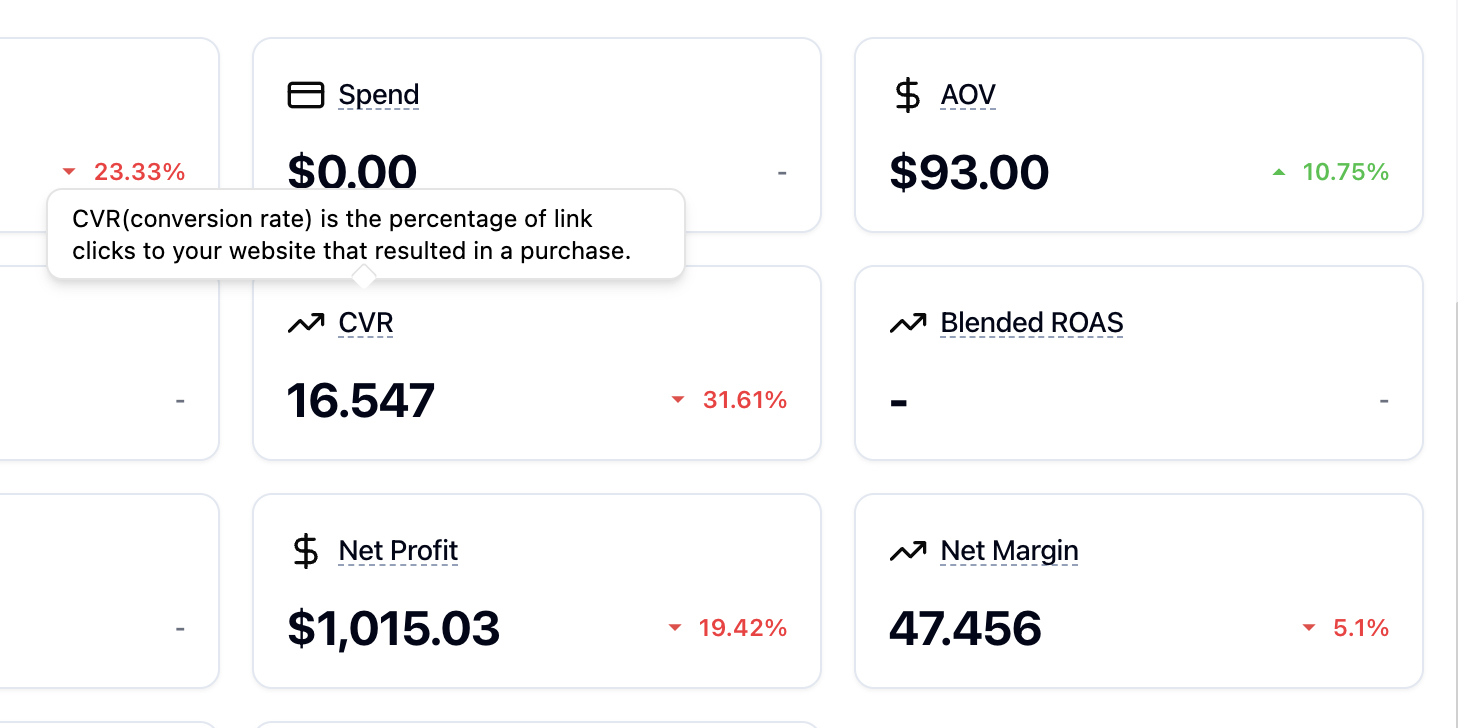
A plain-English dictionary of attribution metrics, including ROAS, CPA, conversion value, CPM, CPC, CTR, CVR, and more—plus how to interpret them without comparing apples to oranges.